
Scent belongs in the neuroarts conversation.
Explore how olfactory arts connect scent with creativity, memory, culture, and the ways we experience the world.
Neuroarts asks how art affects the brain and body.
Neuroarts studies how the arts and aesthetic experiences affect the brain, body, and behavior, and how that knowledge can support people and communities.
Create or experience
A song, a drawing, a performance or a well-designed space can engage our senses and shape the meaning we make.
Notice what responds
Researchers study changes in the brain, body, and behavior, including attention, emotion, movement, and social connection.
Put learning to work
Artists, researchers, and communities explore how that knowledge can inform health, well-being, education, and everyday life.
Let’s follow the evidence.
Olfaction is our sense of smell. Olfactory arts use scent, including remembered or imagined scent, as creative material. Here are three places the research gives us something to explore.
Memory has a personal address.
Research on scent-cued autobiographical memories connects smell with personally meaningful places, people, and periods of life. What comes to mind depends on the person.
Research Review · Larsson Et Al., 2014An odor can become an artistic prompt.
In a 2026 study, researchers used rose and strawberry odors to explore painting, color associations, and object choices. The findings suggest links between scent and artistic expression. They do not establish health benefits.
Individual Study · Davoudi & Sakai, 2026The nose is part of the brain-body conversation.
A 2026 review examines how odor molecules interact with emotional, respiratory, and autonomic pathways. Those mechanisms give researchers questions to investigate, rather than a prescription for a particular scent.
Research Review · Walter Et Al., 2026A useful distinction: evidence about music, dance, or visual art does not automatically establish the same effects for scent. Each question needs evidence that fits.
Our sense of smell gives us more questions to explore.
A systematic review describes olfaction as understudied in neuroimaging compared with other senses. We see an opportunity to bring more attention to scent within neuroarts, and to learn from the people who use it in their homes, creative work, and cultural traditions.
Read the Olfaction Research ReviewSee how Story + Science + Scent™ guides our community work.
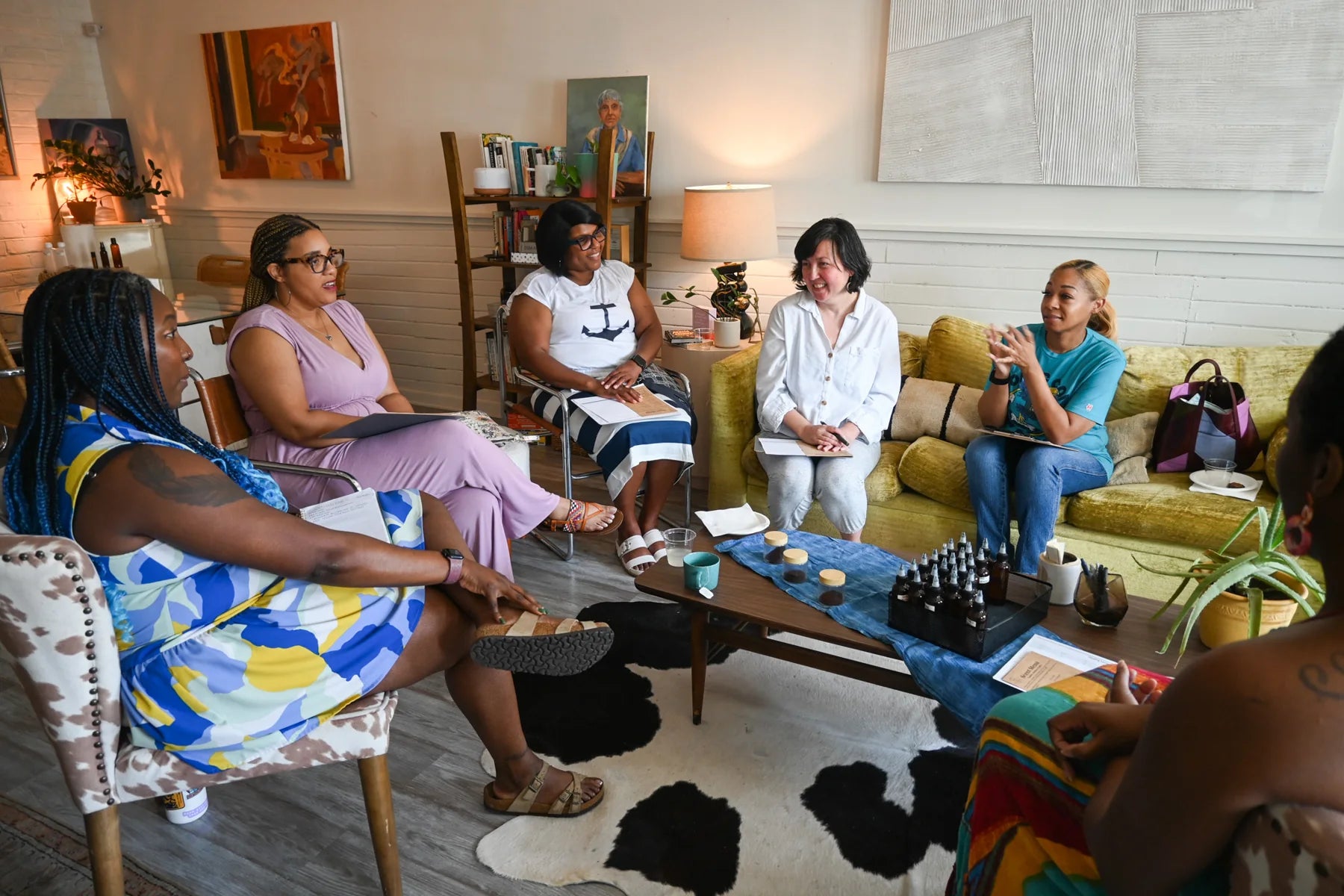
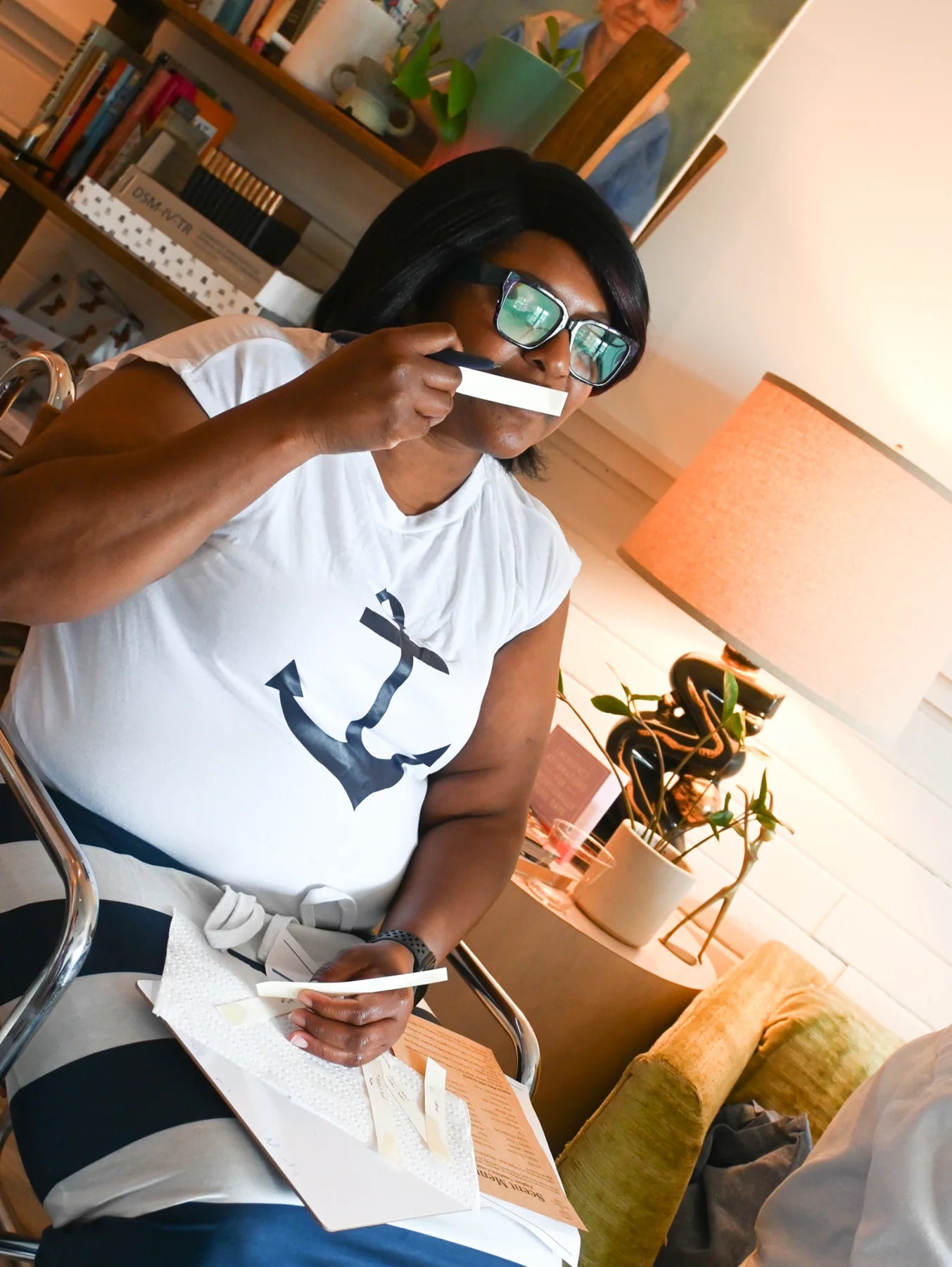
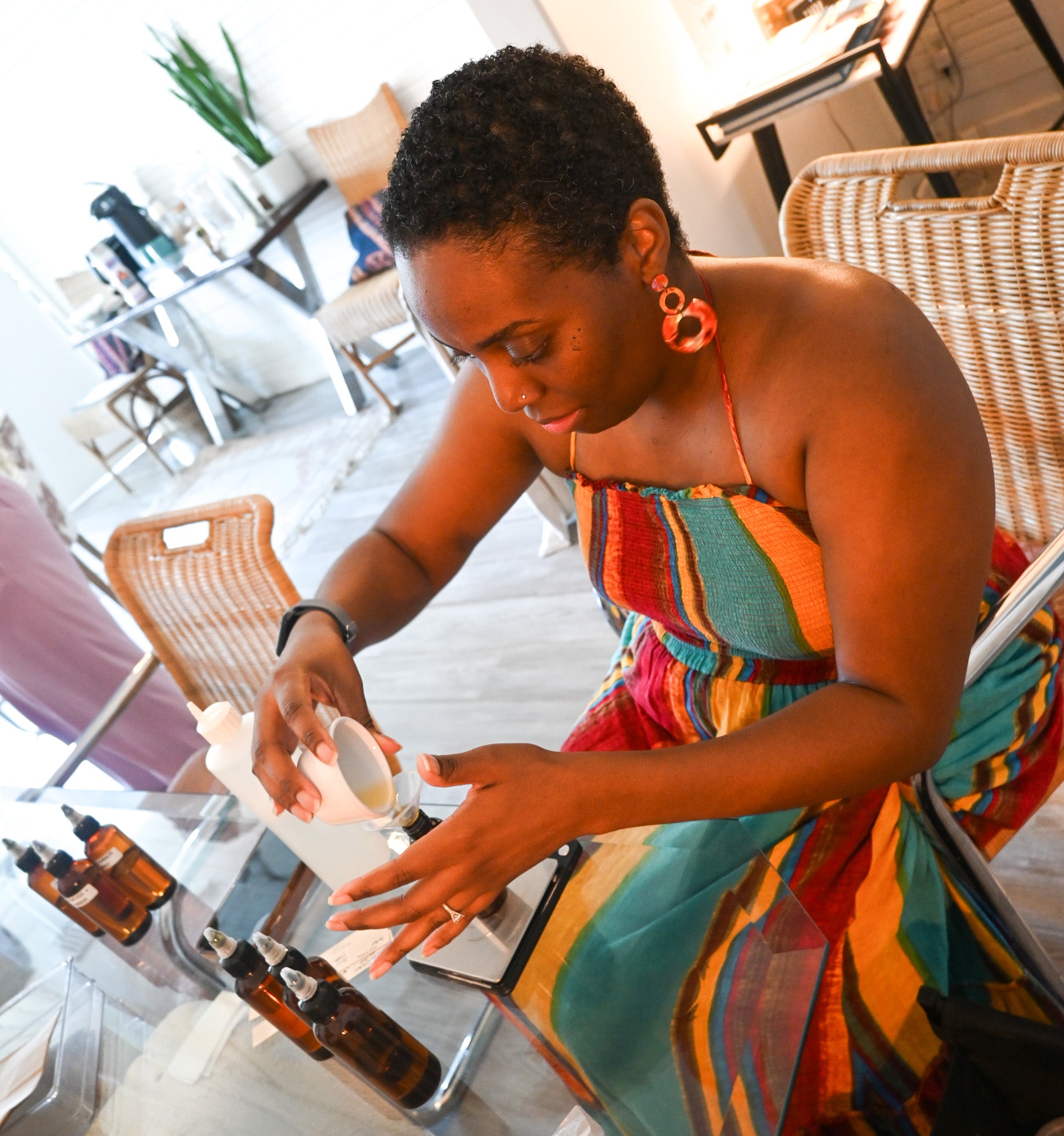
Our framework connects the knowledge people bring with accessible learning and creative exploration. These photographs show scent exploration and making at Healing Hangout with Más Paz Counseling.
Story
Begin with the people.
A place, a cultural tradition, or a question offers the starting point. Participants decide what they want to share.

Science
Make room for different responses.
Explain what research supports, acknowledge what remains unknown, and plan for different smell abilities and sensory needs.
Scent
Give the story a sensory form.
Participants might blend, write, draw, or simply observe. The creative choice belongs to the person.
Build on the programming you already run.
Classrooms & Youth Spaces
Explore smell vocabulary, compare descriptions, or turn an imagined scent into a drawing. Plan supervision and participation choices with the host.
Museums & Cultural Spaces
Pair scent with an object, oral history, or performance. Begin with the people whose stories and traditions are represented.
Community Gatherings
Make room for optional scent exploration, shared making, or reflection within a gathering you already host.
These are programming possibilities. The format, materials, facilitation, and any take-home product are agreed with the host.
The next questions are taking shape.
Our community experience informs what comes next. These initiatives are being developed with access, partnership, and shared learning in mind.
Rooted & Regulated™
A scent-centered self-regulation education program in development for high-school girls and adult women, shaped with licensed professionals and community partners.
In Development · Participant Registration Is Not Open
Explore Rooted & Regulated™Mobile Scent Studio
A new kind of mobile destination in development, combining scent creation, education, olfactory arts, community programming, and cultural research into how scent is used across communities.
In Development · A Future Scent Truck
Explore the Scent Truck VisionYou can explore with curiosity, even without smelling anything.
Make a scent portrait.
Choose a familiar place and name three scents you associate with it. Arrange those impressions in a poem, sketch, or short story. You do not need scent materials.
Compare the stories.
Invite someone else to describe the same place. What did each of you notice? Sharing is optional, and different answers are part of the discovery.
Bring scent into the conversation you’re having.
Researchers, artists, educators, community organizations, and supporters: tell us what you’re exploring and who you hope to serve.
How Can People Take Part Comfortably?
Tell us about scent preferences, allergies, sensitivities or differences in the ability to smell. We also plan for airflow and supervision. People can write, make art, reflect or watch instead of smelling or blending. Sharing personal information and applying products are optional. Our community experiences focus on learning and creativity. Each program explains whether licensed professionals are involved and what they do.
